Erasmus Housing in Athens: Prices, Best Areas & How to Book Safely
/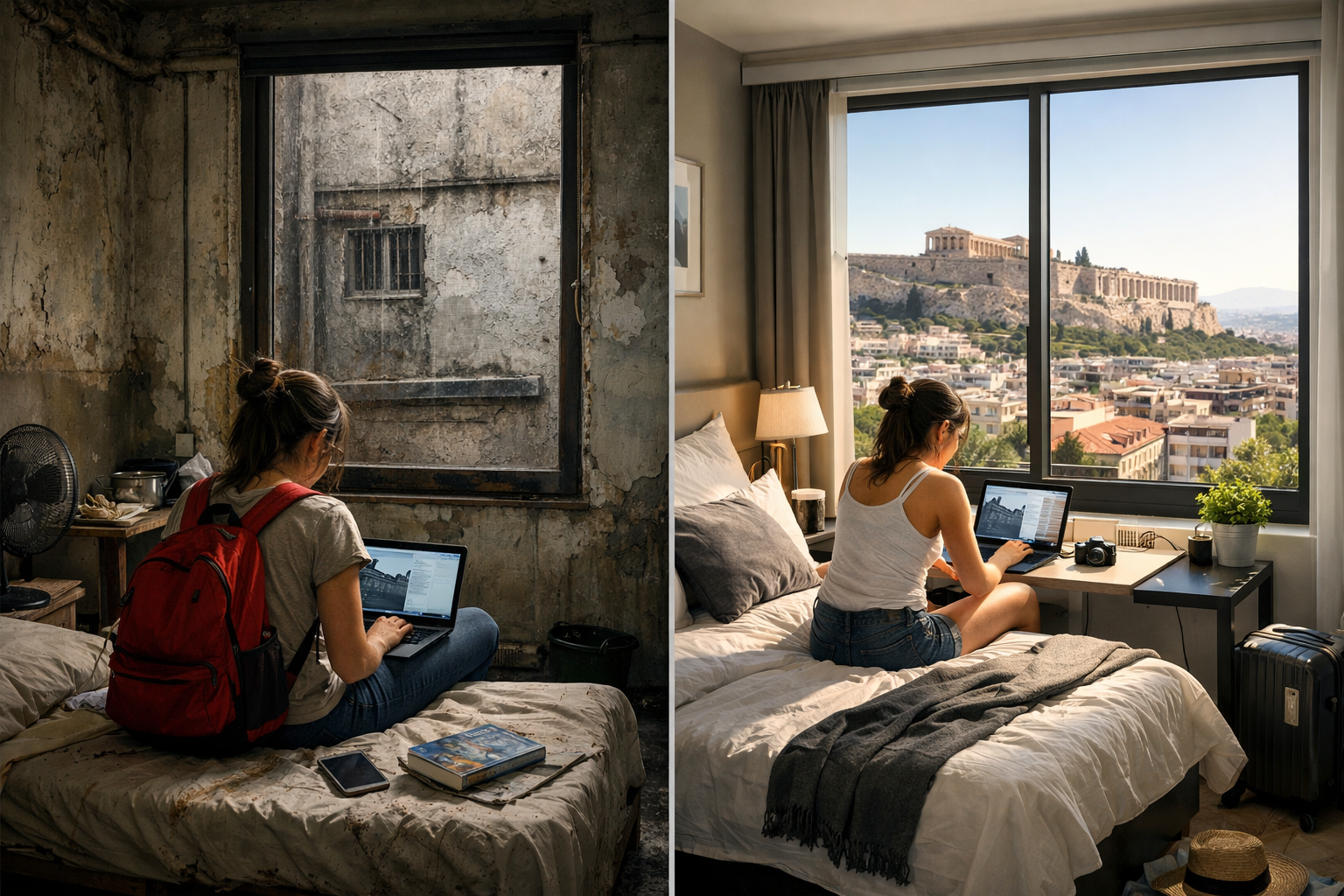
Not all “amazing listings” in Athens are real. Here’s how to spot the difference before you book.
Looking for Erasmus housing in Athens sounds easy.
Until you actually try.
You open ten tabs. Every room looks “amazing.”
Then reality hits.
The “city center” listing is 45 minutes away.
The “renovated” flat smells like old pipes.
And the landlord wants cash, no contract, today.
Classic Athens housing chaos.
This guide cuts through the nonsense.
No fairy tales. No “amazing listings.”
Just real prices, real areas, and how not to get screwed.
What students really mean when they search Erasmus housing Athens
You’re not here for pretty buildings.
You’re here because you need a place that won’t ruin your semester.
You want:
Safe streets
Reliable Wi-Fi
Zero landlord drama
Rent that makes sense
A commute that doesn’t drain your life
That means three things matter:
Area
Price
Booking safely
Get those right, and Athens is brilliant.
Get them wrong, and even cheap rent feels expensive.
How much Erasmus housing in Athens really costs
Based on actual bookings, live listings, and real deals (not wishful prices), here’s what you’re really looking at.
Private room in a shared apartment:
Sepolia: 300–420 euros
Kolonos: 320–450 euros
Kypseli: 330–480 euros
Kallithea: 350–500 euros
Piraeus: 320–480 euros
Exarchia: 380–550 euros
Pangrati: 420–620 euros
Small studio or apartment:
Sepolia: 450–650 euros
Kolonos: 480–680 euros
Kypseli: 500–700 euros
Kallithea: 520–750 euros
Piraeus: 500–750 euros
Exarchia: 580–850 euros
Pangrati: 650–950 euros
Utilities may or may not be included.
Never assume.
Ask what the real monthly total is.
Ask about electricity caps.
That “380-euro deal”?
It can quietly become 520.
Best areas for Erasmus students in Athens
There is no perfect neighborhood.
There is only the right one for your routine.
Exarchia: central, lively, chaotic
Exarchia is one of the first areas students check.
For good reason.
It’s central. Social. Full of energy.
Cafes are packed.
Bars everywhere.
Cheap food on every corner.
You’re close to Omonia, Panepistimio, and Victoria connections.
Commute: 15–25 minutes to many central campuses.
But let’s be real.
It’s noisy.
It’s messy.
Some streets feel rough at night.
If you want calm - skip it.
If you want life - this is it.
Pangrati: stylish, practical, getting expensive
Pangrati exploded in popularity.
Students. Interns. Young professionals.
Everyone wants in.
It feels more organized than Exarchia.
Less chaotic. More “normal life.”
You’ve got cafes, gyms, bakeries, everything.
Commute:
Syntagma: ~10–20 minutes
Here’s the problem.
Prices are climbing. Fast.
Great area…if your budget can handle it.
Kallithea: strong value, easy transport
Kallithea doesn’t get hype.
That’s exactly why it works.
You get better value than central hotspots.
And transport is straightforward.
Line 1 connects you directly to Monastiraki and Omonia.
Commute: 15–25 minutes.
Not glamorous.
But very practical.
And practical wins long term.
Kypseli: big apartments, uneven quality
Kypseli is a gamble.
A smart one…if you know what you’re doing.
One street is beautiful.
The next feels completely different.
That’s why viewings matter here.
You get:
Bigger apartments
Better value per room
Real neighborhood life (Fokionos Negri)
Trade-off?
Metro access isn’t always ideal.
If your commute works, Kypseli can be a steal.
Sepolia: budget-friendly and well connected
Sepolia won’t impress you on Instagram.
But it works.
Line 2 is the key advantage.
Commute:
Omonia: ~10 minutes
Syntagma: ~15 minutes
More residential. Less trendy.
If your goal is value, this is a strong option.
Kolonos: underrated and central (smart pick)
Kolonos sits right next to Sepolia - and gets ignored.
That’s a mistake.
You’re still on Line 2.
Still close to the center.
But often:
Better buildings
Quieter streets
Less chaos
Commute:
Omonia: ~10–12 minutes
Syntagma: ~15–18 minutes
Not trendy.
But very livable.
This is where smart students go.
Piraeus: more space, coastal option
Piraeus isn’t central Athens.
But don’t dismiss it.
You get:
More space for your money
Direct Line 1 access
Proximity to the port
Commute:
Monastiraki: ~20 minutes
Omonia: ~25 minutes
Best for:
Maritime students
Internships near the port
People who prefer space over hype
Downside?
Less “student vibe.”
Longer trips to some campuses.
How to choose the right area for your commute
In Athens, map pins lie.
Travel time tells the truth.
Always check the nearest metro stop.
Then check the full route at rush hour.
If you're unsure how Athens transport actually works, check the public transport guide on RoomsAthens.
Basics:
Line 1 connects areas like Kallithea and Piraeus
Line 2 connects Sepolia and Kolonos to the center
Buses work - but traffic can kill your schedule
If your classes are central, metro wins. Every time.
Twenty minutes is great.
Forty-five minutes sounds okay.
Until you do it twice a day in August.
If you're still comparing areas, check the guide on best student neighborhoods in Athens.
Common traps students fall into
Athens has great rentals.
It also has plenty of nonsense.
Here’s where people get burned.
1. Fake reservation fees
Send 300 euros to “hold” a room? No contract?
Gone.
2. Old photos
Listings use photos from years ago.
Ask for a real video walkthrough.
3. “Bills included” tricks
Until winter comes.
Then everything changes.
4. No contract
No paperwork = no protection.
Walk away.
If you're unsure, read what’s actually required in the documents needed to rent in Greece.
5. Booking the area, not the property
Athens changes street by street.
How to book safely without wasting weeks
Keep it simple.
Ask for a real video tour
Confirm total monthly cost
Verify availability
Check who handles repairs
Read contract terms BEFORE paying
Check transport access
If a landlord dodges questions - that’s your answer.
After hosting 1,000+ students since 2015, the pattern is always the same.
Good rentals are clear.
Bad rentals create pressure.
That’s why smart students go direct.
Not platforms. Not middlemen.
With RoomsAthens, you deal with real, verified rooms.
No platform fees. No guesswork.
When should you start searching?
Earlier than you think.
For September intake?
Start 4–8 weeks ahead.
More if your budget is tight.
The good rooms go first.
The leftovers get expensive fast.
If you’re planning remotely, check the guide on how to rent a room in Athens before arrival.
What a good student rental actually looks like
Forget perfect.
Look for functional.
Clear contract
Working appliances
Reliable internet
Safe building
Honest pricing
Good transport access
Nice extras are a bonus. But location + deal matter more.
Final word
Athens can absolutely work on a student budget.
If you stay sharp.
Choose based on commute.
Check real costs.
Never send money blindly.
And don’t confuse hype with quality.
If you want to skip the chaos and just get a legit room without playing detective, check what’s actually available with RoomsAthens.
Your future self will thank you.